The TandemPlus summer session is coming to an end. With the registration for summer now closed, and virtually all possible matches completed, Tandem matched 63% of interested students, and served a total of 149 participants. The most commonly matched languages were English & Spanish and English & Japanese.
The most common partner requests were English speakers seeking Spanish speakers, Chinese speakers seeking English speakers, and Arabic speakers seeking English speakers. Unfortunately, few Arabic language students registered this summer, although we did see an increase in Chinese language learners. We hope to see this number increase in the coming year. In other words, if you are learning Arabic or Chinese, please sign up for TandemPlus!

Showing posts with label Arabic. Show all posts
Showing posts with label Arabic. Show all posts
Monday, August 5, 2013
Tuesday, March 5, 2013
TandemPlus Bowling Night - A huge success!
Last Friday, March 1, TandemPlus hosted a Bowling Night in Goldy's Gameroom. The event lasted from 3:30-5:30 PM and drew a crowd of approximately 25-30 people, who spoke languages including Japanese, Chinese, Arabic, Russian, Malay, Farsi, Portuguese and English. It was such a hit that participants continued bowling and conversing long after the free bowling period ended! Many participants made new friendships and learned about many different cultures and ways of life. The next TandemPlus event will take place Friday, April 5. Stay tuned for more details.
Tuesday, November 20, 2012
TandemPlus Roundup!
TandemPlus is pleased to announce that it has had a very successful fall semester! There was an approximate total of 481 language partnerships through Tandem's Face-to-Face Exchange program. The most popular language partnerships were Chinese seeking English, English seeking Spanish, and Arabic seeking English. There was also an exciting amount of Korean/English partnerships this year. It was a great fall semester and we are eager to start spring semester off on the right foot. Registration for TandemPlus this spring semester is expected to open during the first week of classes (late January).
Thursday, October 25, 2012
The LPE Changes with the Times
The Language Testing Program now offers computerized Language Proficiency Exams (LPEs) in more languages than ever before. Tests currently in development feature culturally-rich authentic source material such as clips from modern Korean film, a look at the Somali-speaking community in the Twin Cities, and much more!
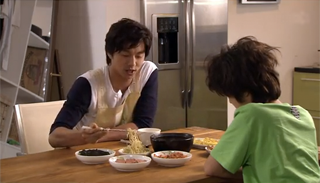
Example of culturally authentic material that could be used in LPE
Computerized LPEs were established in 2001. Hundreds of language students take them each semester to fulfill the College of Liberal Arts (CLA) language requirement and as a gateway to advanced language study. The mission of the Language Testing Program has remained constant: to accurately assess students' ability to listen, read, write and speak in the target language.
However, the program has changed and grown since 2001. The LPE is constantly being improved and the pace of modernization and innovation has picked up in the last few years. The Language Testing Program has focused on two new goals since 2010: to serve as many language students as possible and to improve the students' exam experience by including contemporary and diverse media from the target language culture.
Before 2010, a computerized test was available only for students of French, German and Spanish and a few related languages. Students of Asian and other less commonly taught languages were limited to paper-based tests, or had no exam options at all.
Tests are now in place for Arabic, Chinese, Hmong, Italian, Japanese and Russian, and there is a second version of the Spanish LPE. In addition, development is underway for Finnish, Korean, Somali, and Swahili. All of these tests were made possible through an influx of funding from Title VI and other sources, along with a committed effort on the part of the Language Testing Program and the individual language programs to work together tirelessly and collaboratively. Once all of the newer exams are completed, the LPE will be available for almost all non-Classical languages offered in CLA and will reflect the diversity of languages available at the University of Minnesota.
As new tests are created, the Language Testing Program and the developers aim to bring new depth to the student experience and to conform more closely to current trends in second language pedagogy with increased emphasis on culturally-rich contexts. The new exams retain the original LPE goal of validating the work of students in their four semesters at the university by providing an opportunity to show what they can do with the target language in a communicative context.
However, they are not just tests - they are also learning opportunities for students, highlighting something new about the culture, history, or people of the target language through the use of authentic materials. Students may learn, for example, how traditional holiday celebrations have changed over time as societies become increasingly multicultural. There are also explorations of how gender roles have shifted and how these shifts impact language as well as cultural practice. One exam features an innovative, and perhaps surprising, environmental initiative. Another explores the lyrics of a popular song from a YouTube video.
The piloting process for new LPEs often includes a survey of student opinions about the test. Reactions to the new authentic content have been overwhelmingly positive. Test-takers have said that they were surprised and pleased to see that they had no difficulty reading texts that they might encounter on a daily basis in the target culture.
The Korean LPE also offers a significant technological innovation: the incorporation of authentic video segments into the listening section. The test includes five diverse clips from modern Korean film showing natural and interesting interactions between native speakers. The use of authentic video is an excellent platform from which to assess listening proficiency, since it ties closely to the construct of listening in a communicative context, where meaning is negotiated based on a variety of input sources. The Korean listening exam has already been piloted once, and the response to the test was enthusiastically positive. Students reported that they especially enjoyed the video segments and felt confident that they could understand content overall, even though there may have been a few words unfamiliar to them.
The Somali listening section will include some authentic video segments as well. This exam stands out because it is set locally and explores the lives of immigrants integrating with the larger community as they share their language and culture - a reflection of the changing face of the Twin Cities.
Since 2010, new LPE creation has been led by Gabriela Sweet, who has worked tirelessly to organize a rotating team of developers, coordinate with multiple departments and stakeholders, and keep all projects on time and moving forward. The Korean, Somali, and Swahili development teams also include Language Center AV Developer Alaina Witt, Item Reviewers Xinyi Wu and Meghan McFadden, and LC Technical Coordinator Diane Rackowski.
Much of the funding for Korean development has been provided by a CLA InfoTech Tools for Discovery Grant. Title VI funding managed by the Institute for Global Studies has provided some travel and development grants for Somali and Swahili.
The Language Testing Program and the Department of Asian Languages and Literatures plan to present the new Korean listening section featuring authentic video later this winter. The U of M language community will have an opportunity to see how the classic LPE format can be modernized with technology to provide students with an educational, culturally-rich, and even enjoyable testing experience.
Example of culturally authentic material that could be used in LPE
However, the program has changed and grown since 2001. The LPE is constantly being improved and the pace of modernization and innovation has picked up in the last few years. The Language Testing Program has focused on two new goals since 2010: to serve as many language students as possible and to improve the students' exam experience by including contemporary and diverse media from the target language culture.
Before 2010, a computerized test was available only for students of French, German and Spanish and a few related languages. Students of Asian and other less commonly taught languages were limited to paper-based tests, or had no exam options at all.
Tests are now in place for Arabic, Chinese, Hmong, Italian, Japanese and Russian, and there is a second version of the Spanish LPE. In addition, development is underway for Finnish, Korean, Somali, and Swahili. All of these tests were made possible through an influx of funding from Title VI and other sources, along with a committed effort on the part of the Language Testing Program and the individual language programs to work together tirelessly and collaboratively. Once all of the newer exams are completed, the LPE will be available for almost all non-Classical languages offered in CLA and will reflect the diversity of languages available at the University of Minnesota.
As new tests are created, the Language Testing Program and the developers aim to bring new depth to the student experience and to conform more closely to current trends in second language pedagogy with increased emphasis on culturally-rich contexts. The new exams retain the original LPE goal of validating the work of students in their four semesters at the university by providing an opportunity to show what they can do with the target language in a communicative context.
However, they are not just tests - they are also learning opportunities for students, highlighting something new about the culture, history, or people of the target language through the use of authentic materials. Students may learn, for example, how traditional holiday celebrations have changed over time as societies become increasingly multicultural. There are also explorations of how gender roles have shifted and how these shifts impact language as well as cultural practice. One exam features an innovative, and perhaps surprising, environmental initiative. Another explores the lyrics of a popular song from a YouTube video.
The piloting process for new LPEs often includes a survey of student opinions about the test. Reactions to the new authentic content have been overwhelmingly positive. Test-takers have said that they were surprised and pleased to see that they had no difficulty reading texts that they might encounter on a daily basis in the target culture.
Here are some sample student reactions:
It made me realize the potential of a real-life usage for the language I've been studying.
I liked that the readings were all things I'd have to figure out in real life. It was a very pleasant experience to read articles from Japan.
The Korean LPE also offers a significant technological innovation: the incorporation of authentic video segments into the listening section. The test includes five diverse clips from modern Korean film showing natural and interesting interactions between native speakers. The use of authentic video is an excellent platform from which to assess listening proficiency, since it ties closely to the construct of listening in a communicative context, where meaning is negotiated based on a variety of input sources. The Korean listening exam has already been piloted once, and the response to the test was enthusiastically positive. Students reported that they especially enjoyed the video segments and felt confident that they could understand content overall, even though there may have been a few words unfamiliar to them.
The Somali listening section will include some authentic video segments as well. This exam stands out because it is set locally and explores the lives of immigrants integrating with the larger community as they share their language and culture - a reflection of the changing face of the Twin Cities.
Since 2010, new LPE creation has been led by Gabriela Sweet, who has worked tirelessly to organize a rotating team of developers, coordinate with multiple departments and stakeholders, and keep all projects on time and moving forward. The Korean, Somali, and Swahili development teams also include Language Center AV Developer Alaina Witt, Item Reviewers Xinyi Wu and Meghan McFadden, and LC Technical Coordinator Diane Rackowski.
The current language-specific developers are:
Finnish: Dan Karvonen, Jaana Viljakainen
Korean: Hangtae Cho, Yunseong Cheong
Somali: Said Ahmed, Abdulkarim Maalin
Swahili: Angaluki Muaka
Much of the funding for Korean development has been provided by a CLA InfoTech Tools for Discovery Grant. Title VI funding managed by the Institute for Global Studies has provided some travel and development grants for Somali and Swahili.
The Language Testing Program and the Department of Asian Languages and Literatures plan to present the new Korean listening section featuring authentic video later this winter. The U of M language community will have an opportunity to see how the classic LPE format can be modernized with technology to provide students with an educational, culturally-rich, and even enjoyable testing experience.
Monday, October 1, 2012
TandemPlus Kick-off a Huge Success
On Friday afternoon, September 28, TandemPlus hosted its Fall Kick-off and Orientation Event. Approximately 70 people attended the event, and played multilingual (Spanish-English, Arabic-English, Chinese-English, and just English) Taboo games, partook in multilingual conversation circles, and enjoyed snacks and refreshments. The event was open to TandemPlus participants and interested parties and was enjoyed by all. Stay tuned for more information about the next Tandem event in late October.
FYI -- there is still (some) time to register for a TandemPlus second language culture and conversation partner. Registration for Fall semester will close on Friday, October 5, so if you're interested in registering, do it soon!
Tuesday, August 7, 2012
TandemPlus and ESL at the St. Paul Saints Game
On Friday, July 27, TandemPlus co-hosted a night of baseball and fun with the Minnesota English Language Program. This is the first event co-hosted by these university programs and it was a great success! Both American and international students attended the Saint Paul Saints baseball game at Midway Stadium in St. Paul and spoke a variety of languages including Arabic, German, Japanese, Chinese, English and Spanish. Overall students had a great time and after 11 innings the Saints pulled through and won the game. The night ended with a spectacular fireworks show and celebration over the Saints win. We hope you will join us for our next event, and don't forget to mark your calendars -- Fall registration is less than a month away!
Tuesday, May 29, 2012
Congratulations Anna!
Congratulations to Tandem Plus Assistant Anna Kaminski, who received a Boren Scholarship to study in Jordan next year! Anna, who is a junior at the University of Minnesota, has been studying Arabic for three years, and currently is a student in Hisham Khalek's Arabic 5102 class. She studied in Oman in Summer 2011 and is very excited to be going abroad again.
Boren Scholarships provide up to $20,000 to U.S. undergraduate students to study abroad in areas of the world that are critical to U.S. interests and underrepresented in study abroad, including Africa, Asia, Central & Eastern Europe, Eurasia, Latin America, and the Middle East. To learn more about Boren Scholarships, click here.
Thursday, March 22, 2012
World Languages Day: Branch out and Learn!
While University of Minnesota students and faculty are counting down to various deadlines and the end of the semester, the World Languages Day planning committee continues the count-down to World Languages Day, and we can't wait! The event is scheduled for Tuesday, May 15, just two months away. We expect to draw over 1000 high school sophomores to campus.
This year, we are happy to see returning high schools from last year, from the Twin Cities metro area, as well as the northern, southern, and central areas of Minnesota. We also welcome new schools or schools that participated prior to 2011 representing a wide range of cities and town in Minnesota.
New teachers and students are in for a treat. Returnees will recognize perennial favorites on the course list, and will once again be able to learn traditional Hmong dance, greet each other in Italian, and play American Idol in German - and that's just the a small sampling of the offerings!
Reading over the course list is like flipping through a virtual travel catalogue, one that sparks cultural inquiry. Students can take Arabic Language and Culture: a Trip to Tunisia, Excursion Brazil, and A Virtual Walk through Vienna, all without leaving the U of M campus. For students who do want to leave campus, information on travel all over the world will be offered in three study abroad information sessions.
New this year will be the sounds of Afro-Cuban Music, a Spanish course which will include special musical guests. Experiencing the Chinese Language takes students on a journey through thousands of years of history. Classes such as the debut of From Atheists to Libertines: French Philosophy and the Limits of the Imagination challenge our assumptions in learning about other cultures and places, and the people we meet along the way.
There is also a cross-curriculum focus on sustainability offered this year: Water Conservation and Ecology (French), Sustainability, Insects, and Spanish, as well as Green Germany, each taught in the target language. Students will have the chance to apply their knowledge of science and the economy to their language studies in these different cultural contexts.
Take a look at our online course list for both new and proven ways to stretch imagination, broaden cultural knowledge, and express yourself in 23 different languages offered at World Languages Day this May.
In the meantime, the planning continues! Look out for more information on registration coming soon. You can view the class list, and learn more about the event at our website.
Thursday, December 15, 2011
TandemPlus News
On Friday, December 2, TandemPlus hosted the second annual "Mocktail Happy Hour" at the Tea House Restaurant close to campus. Seventeen students attended the event and spoke languages like Japanese, Arabic, Chinese, and English. We discussed everything from linguistic similarities to culture to politics, all while enjoying a delicious variety of Chinese appetizers. This was the last TandemPlus event for the Fall semester. The Tandem team hopes that you will all join them again next semester.
Friday, February 18, 2011
Anna Kaminski receives Critical Language Scholarship
Undergraduate Office Assistant Anna Kaminski has been awarded a Critical Language Scholarship (CLS) for Arabic. This competitive scholarship offers intensive summer language institutes overseas in thirteen critical need foreign languages for summer 2011. The CLS program is part of a U.S. government effort to increase the number of Americans studying and mastering critical foreign languages. Through this opportunity, she will be sent to one of five countries, Oman, Jordan, Morocco, Tunisia, or Egypt from June to August for intensive Arabic instruction and cultural immersion. Anna is a double major in Art and Global Studies.
Subscribe to:
Posts (Atom)